
Category Archives: Abortion Pills

Abortion Pills and Birth Control

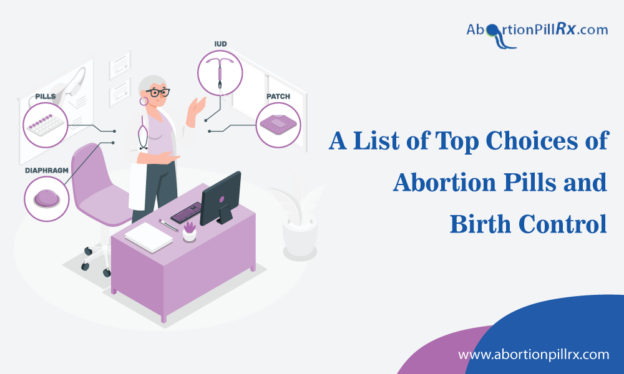
A List of Top Choices of Abortion Pills and Birth Control

As a wholesome care station for women and their reproductive health concerns, our website has multiple medicines and pharmaceutical products. Right from abortion pills to birth control options, we house everything. Thus, we aim to educate every person about our product offerings, and how they benefit you. It will help you make your top choice through the knowledge of a variety of medication brands, and why you should purchase those. Below, you will find collated information in snippets to get a headway about the pills useful for your pregnancy and more.

The Certified Abortion Pills at Our Outlet

What if you get all types of abortion pills under one roof? You have the answer to your question – our pharmacy. It has a host of pregnancy termination pills, certified for the medical procedure of expelling the products of conception from your body, without any risks or hassles.

1.  MTP Kit

The most popular and best buy is the MTP Kit for abortion. Because this pack contains Mifepristone 200mg and Misoprostol 200mcg x 4 pills, it serves the pregnancy termination needs in one kit itself. You do not have to purchase the pills separately. Rather, you can also order multiple MTP Kits at one time. For a pregnancy within 5 weeks, 8 pills of Misoprostol are effective. But for pregnancy between 6 to 9 weeks, you need 8 to 12 Misoprostol pills. In that case, you can purchase 2 to 3 kits at once.

2.  Generic RU486

Just like Mifepristone, this medication is anti-progesterone. The dosage is 200mg, you need to take it orally with water on day 1. Do not chew, powder, or crush the medicine. The pill is as effective to detach the embryo from the uterus wall as its counterparts like Mifepristone and Mifeprex (explained further).

3.  Mifeprex

As discussed above, the function of Mifeprex 200mg is the same as that of Mifepristone and Generic RU486. The pill is adept in loosening the embryo from the endometrial lining. The medicine suppresses the progesterone hormone. This causes the pregnancy to stop. The uterine lining breaks and prepares you for the next stage of the pregnancy termination process.

4.  Cytolog

This is the secondary medication and a prostaglandin E1 analog. Working like Misoprostol, it causes uterine contractions within 1 to 2 hours of its intake. You can administer the medicine either buccally or vaginally. But start with the medication after 24 to 48 hours of using Mifeprex or its relevant brand, the choice is yours. The medicine can widen the cervix to pass out the products of conception easily. It also leads to heavy vaginal bleeding and inducement of labor.

Together, it helps to end the pregnancy within 24 to 72 hours. If you wish to use Cytolog alone for abortion, you can do so. But its efficacy rate is higher when combined with likes such as Generic RU486. If taking the medicine individually, then each set of dosage will contain 4 pills of 200 mcg. If you are utilizing 8 pills, then take a set in an interval of 3 hours each buccally. Repeat the same with that for 12 pills.

Our Bestsellers in Birth Control Products and Pregnancy Check

We take care of your pregnancy needs not only with medical termination but with birth control measures as well. On our website, you will find an array of birth control pills, emergency contraceptive medication, a Pregnancy Testing Kit, also Vaginal Ring birth control.

·        The Pregtest Card assists in detecting if you have conceived or not by a urine test. You can use the pregnancy strip at home.

·        The Nuvaring or vaginal ring is an insertable product into the vagina. It produces hormones that safeguard you against pregnancy. You need to replace a ring every 21 days.

·        You will also get Plan B, which you can utilize as a backup method in an emergency to protect against unplanned pregnancy. But you have to take it within 72 hours of getting intimate.

·        You can also try a family of Ovral pills including Ovral, Ovral L, and Ovral G. These are daily intake routine contraceptive pills just like Loette and Yasmin medicine.

·        A routine birth control pill prevents pregnancy by suppressing ovulation and thickening the cervical mucus so that the sperm does not get the chance to fertilize the egg.

·        Lastly, the pills may break the endometrial lining, and stop the implantation process. So, make your decision on which contraception works for your interest.

To Conclude

Now that you have a better idea as to which abortion pills and birth control alternatives, visit our store now, and order the product that is most suitable for you.
This entry was posted in Abortion Information, Abortion Pill Information, Abortion Pills, Birth Control Pills, Contraceptive pills, Cytolog, Generic RU486, mifeprex, MTP kit, Plan B Pill, Women's Health and tagged Abortion pills, Birth Control Pills by .

Necessity and Benefit of Using Birth Control After Abortion

Recently updated on February 25th, 2023 at 05:25 am

Birth Control Pills

Your fertility remains unaffected by ending your pregnancy with the help of abortion pills. But you can conceive soon after the procedure if you do not use birth control. Thus, begin with contraception after abortion if you do not wish to encounter an unplanned pregnancy. There are several types of birth control that you can choose. Some are available over the counter, and others are on prescription or usable following a professional’s assistance at a clinic.

In this post, we will talk about birth control options, their importance, and the contraceptive types that you can look for after pregnancy termination.

Birth Control Options After an Abortion at Home

When you pick contraception after abortion, make sure you know what you need and if the product will suit your health. Ask yourself if you need one that you want to use daily or at intervals. If you are forgetful enough, then certain options may not work for you. Then there are choices that may take time to work, and others give instant results. Also, you can make the blood flow lighter through particular birth control options.

·        After ending a pregnancy at home with pills, you can opt for hormonal birth control. Some of the choices are the patch, contraceptive pill, shot, injection, and others. You can begin with any of these when the bleeding stops or reduces.

·        An Intrauterine Device (IUD) is placed by a physician at the clinic. But you can only use it after 1 to 2 weeks of the successful procedure.

·        If you want to safeguard against pregnancy at the time of intercourse, you may utilize female or male condoms, a cervical cap, a sponge, a diaphragm, or spermicide.

Irreversible, LARC, and Short-Term Contraception

You can go for permanent contraception after an abortion procedure. Here is what you must know:

·        For instance, if you do not wish to conceive in your lifetime again, then tubal ligation or sterilization will work.

·        This is an irreversible process, wherein the surgeon will clip, block, or remove the fallopian tubes. Thus, no mature egg will remain reachable to sperm for fertilization.

·        You can also choose long-acting reversible contraception or LARC that protects you from getting pregnant for months or years together.

·        In LARC, the choices are implants, hormonal shots, intrauterine devices, and injections. In short-acting birth control, daily birth control pills and barrier methods such as condoms are good alternatives.

What is Emergency Contraception?

Emergency contraception is different from regular birth control. You need only to use it if you have had unprotected intercourse. Some people even take it if they fear that the birth control they use may fail. This is common for women if they miss too many birth control pill doses, condom slips or tears, and similar events. Depending on the type of medication you use, the protection period can last between 3 to 5 days after the intimacy. One of the products is Plan B One-Step an emergency contraceptive pill.

You need to take the pill orally with water within 72 hours of unprotected intercourse. The sooner you consume the medicine, the higher the chances of you not getting pregnant. However, if the fertilized egg implants on the uterus wall, then the pill cannot terminate or undo the pregnancy. So, if you have any confusion between Plan B and the abortion pill, then do understand that the former cannot end your established pregnancy.

When to Begin Birth Control on Completing the Abortion?

Ovulation may happen by 2 weeks after a successful abortion. The earlier you end the pregnancy, the sooner the ovulation may take place. Thus, it is advisable to start with birth control within 3 to 9 days of pregnancy termination. And you should not avoid contraceptives if you are sexually active.

·        You can start with a condom if not wanting to take a birth control pill or regular contraception alternatives. A condom may also protect you against STIs and STDs.

·        But if you do not wish to utilize any form of contraception after abortion, then do not have vaginal intercourse at the moment, until prepared for it.

·        In case you take a week or more to start with birth control containing hormones such as the IUD, PILL, vaginal ring, and patch, then for the first 7 days, use a condom.

·        If you wish to change the contraceptive you used to utilize before pregnancy termination, then consult your healthcare provider for discussion on the birth control to take up.

Final Words

If you want more guidance on the kind of birth control to use after a medical abortion, then do not delay having a word with your physician. Also, if the abortion bleeding makes it uncomfortable to use insertable birth control in the vagina, then try other options, such as birth control pills, patches, injections, and more. Do not switch between two alternatives often, as it can take time for your body to adjust to the frequent changes.

This entry was posted in Abortion Information, Abortion Pill Information, Abortion Pills, Birth Control Pills, Plan B Pill, plan B pills and tagged Abortion pills, contraception after abortion, Plan B by .

Is There a Chance to Get Pregnant Soon After Abortion?

Recently updated on January 6th, 2023 at 09:16 am

Have you undergone an abortion lately? If so, you may have a question in mind – can you conceive soon after pregnancy termination? The answer to this is a yes. The abortion pill procedure has no ill effects on the chances to conceive. If you are sexually active, then it is moreover advisable to use birth control to prevent an unplanned pregnancy. So, what are the safety and risk factors of using abortion pills? How soon can you conceive? When should you plan to get pregnant?

Why the abortion pills have no effects on future pregnancies? And which pregnancy test you must get if you conceive immediately after abortion? These are some of the questions we will provide the facts for.

Safety and Risks of Medical Abortion

In a medical abortion, Mifepristone and Misoprostol pills come in use. They stop the pregnancy from advancing by blocking the progesterone hormone. The uterine lining sheds. This causes the fetus to disengage from the endometrial lining. Misoprostol causes uterine contractions. It helps to remove the pregnancy parts from the womb. The cervix also widens to easily exit the products of conception. Then heavy vaginal bleeding follows to empty the uterus.

Mifepristone and Misoprostol treatment combinedly has a success rate of 99%. Thus, the risk of pregnancy termination failure is less. Misoprostol pills alone are 85% effective. Complications if any are usually because of incorrect use of the pills. And this may lead to increased bleeding or sepsis. In some cases, an infection can result. And this may interfere with the reproductive health of the person.

The risks of complications in a future pregnancy are greater from invasive pregnancy termination. Here, the risk of scarring of the uterus or harm to the cervix is greater because of the use of equipment. But abortion pills help you with the spontaneous removal of products of conception. It is just like a natural miscarriage but induced by medicine.

When Can Pregnancy Take Place After Abortion?

Soon after ending your pregnancy, the chances of pregnancy are within 2 weeks. This is because of ovulation, which can take 2 weeks to happen after the procedure. But depending on one individual to another, the menstrual cycle length can vary. Also, the earlier you are into gestation age (duration of pregnancy), the sooner the ovulation may occur.

Those with advanced pregnancies going through an abortion may at least have a few weeks in hand before conceiving. Following a medical abortion, you must start with birth control within 3 to 8 days. But do this only if you are sexually active. Otherwise, there is no need to go through any additional method of contraception.

When Should You Try to Conceive Following an Abortion?

The perfect time for pregnancy after abortion is when the heavy vaginal bleeding stops. Not only this, the abortion bleeding must completely go. And, you should do it at least give 3 weeks before vaginal intercourse, if not more. Avoid inserting anything inside the vagina during this moment. This includes menstrual cups and tampons, lest giving rise to the risk of infection.

This will also give time for the cervix to heal. And the ovulation has to come back to normalcy. But your healthcare provider may advise you to wait until the first menstrual period passes. Only then you must think of conceiving. That assists to get a better estate of the delivery date for the following pregnancy.

And to completely assure yourself of any risks and complications, waiting for a few months before the next pregnancy occurs, is more conducive and healthier. At this time, if the individual has any mixed feelings about having her pregnancy terminated or other issues, it can be handled easily. And you can then better prepare for pregnancy.

How to Check for a Pregnancy That Happens After an Abortion?

If you conceive almost before the pregnancy hormone level goes down, then which pregnancy test will give better accuracy? It is an ultrasound scanning of the uterus. This will reveal the location of the pregnancy as well as the exact duration of the pregnancy. The ultrasound pregnancy test is unaffected by the high levels of the hormone human chorionic gonadotropin (hCG). This is usually seen during pregnancy and for a few days to weeks after abortion.

A blood test is the second most reliable option. But this method of pregnancy check is not that accurate because hCG hormone levels may show up in the report. And the presence of pregnancy hormones may make you confused if you are pregnant or not. You must avoid depending on a home pregnancy test kit. Because testing the urine sample will give the wrong idea of pregnancy taking place. A pregnancy test kit may show an accurate check for conception after 3 weeks of abortion.

If the pregnancy is intrauterine, you are safe. But an ectopic pregnancy, fertilization outside the uterus, is harmful and life-threatening. In this scenario, you have to choose pregnancy termination through surgery. If you find any signs of pregnancy or miss a period once the menses regularize, then perhaps it is time to check if you have conceived.

To Conclude

Abortion does not risk your chances of getting pregnant in the future. You can conceive soon after an abortion if you are sexually active, and do not use birth control. To plan for pregnancy following an abortion, there are a few factors you must consider. And if you need to get tested for pregnancy, choose the most effective and convenient method of pregnancy testing as per the advice of your physician.

This entry was posted in Abortion Information, Abortion Pills, Women's Health and tagged abortion, Medical Abortion, menstrual cycle, reproductive health, ultrasound by .