Category Archives: Abortion Pill Information

Necessity and Benefit of Using Birth Control After Abortion

Recently updated on February 25th, 2023 at 05:25 am
Birth Control Pills

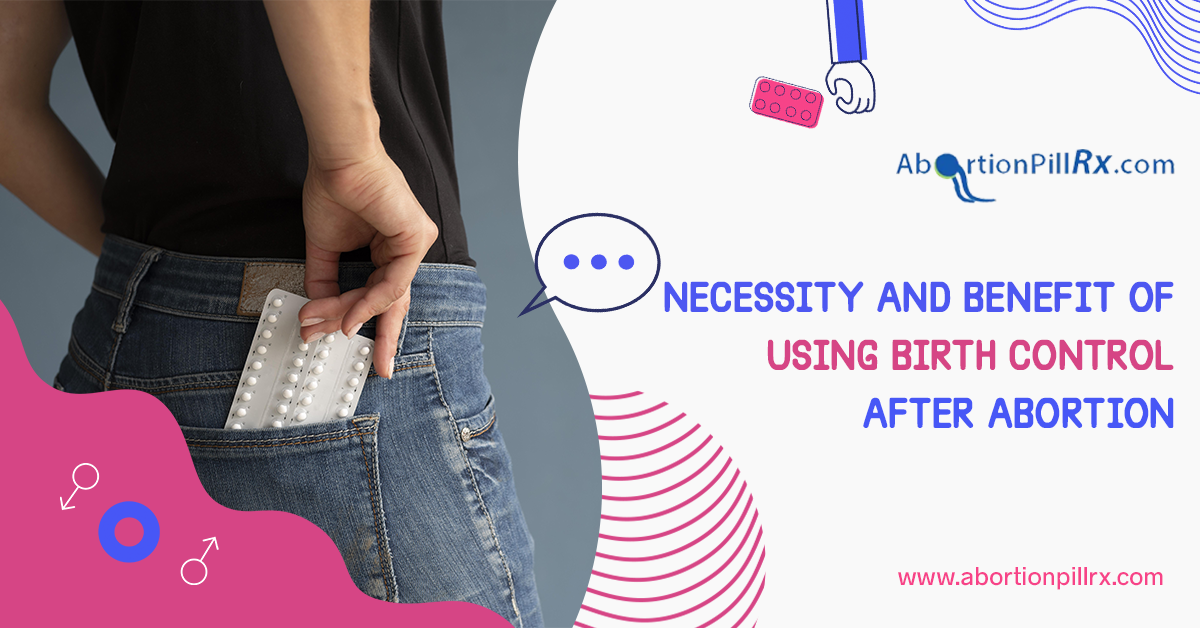
Your fertility remains unaffected by ending your pregnancy with the help of abortion pills. But you can conceive soon after the procedure if you do not use birth control. Thus, begin with contraception after abortion if you do not wish to encounter an unplanned pregnancy. There are several types of birth control that you can choose. Some are available over the counter, and others are on prescription or usable following a professional’s assistance at a clinic.

In this post, we will talk about birth control options, their importance, and the contraceptive types that you can look for after pregnancy termination.

Birth Control Options After an Abortion at Home

When you pick contraception after abortion, make sure you know what you need and if the product will suit your health. Ask yourself if you need one that you want to use daily or at intervals. If you are forgetful enough, then certain options may not work for you. Then there are choices that may take time to work, and others give instant results. Also, you can make the blood flow lighter through particular birth control options.

·        After ending a pregnancy at home with pills, you can opt for hormonal birth control. Some of the choices are the patch, contraceptive pill, shot, injection, and others. You can begin with any of these when the bleeding stops or reduces.

·        An Intrauterine Device (IUD) is placed by a physician at the clinic. But you can only use it after 1 to 2 weeks of the successful procedure.

·        If you want to safeguard against pregnancy at the time of intercourse, you may utilize female or male condoms, a cervical cap, a sponge, a diaphragm, or spermicide.

Irreversible, LARC, and Short-Term Contraception

You can go for permanent contraception after an abortion procedure. Here is what you must know:

·        For instance, if you do not wish to conceive in your lifetime again, then tubal ligation or sterilization will work.

·        This is an irreversible process, wherein the surgeon will clip, block, or remove the fallopian tubes. Thus, no mature egg will remain reachable to sperm for fertilization.

·        You can also choose long-acting reversible contraception or LARC that protects you from getting pregnant for months or years together.

·        In LARC, the choices are implants, hormonal shots, intrauterine devices, and injections. In short-acting birth control, daily birth control pills and barrier methods such as condoms are good alternatives.

What is Emergency Contraception?

Emergency contraception is different from regular birth control. You need only to use it if you have had unprotected intercourse. Some people even take it if they fear that the birth control they use may fail. This is common for women if they miss too many birth control pill doses, condom slips or tears, and similar events. Depending on the type of medication you use, the protection period can last between 3 to 5 days after the intimacy. One of the products is Plan B One-Step an emergency contraceptive pill.

You need to take the pill orally with water within 72 hours of unprotected intercourse. The sooner you consume the medicine, the higher the chances of you not getting pregnant. However, if the fertilized egg implants on the uterus wall, then the pill cannot terminate or undo the pregnancy. So, if you have any confusion between Plan B and the abortion pill, then do understand that the former cannot end your established pregnancy.

When to Begin Birth Control on Completing the Abortion?

Ovulation may happen by 2 weeks after a successful abortion. The earlier you end the pregnancy, the sooner the ovulation may take place. Thus, it is advisable to start with birth control within 3 to 9 days of pregnancy termination. And you should not avoid contraceptives if you are sexually active.

·        You can start with a condom if not wanting to take a birth control pill or regular contraception alternatives. A condom may also protect you against STIs and STDs.

·        But if you do not wish to utilize any form of contraception after abortion, then do not have vaginal intercourse at the moment, until prepared for it.

·        In case you take a week or more to start with birth control containing hormones such as the IUD, PILL, vaginal ring, and patch, then for the first 7 days, use a condom.

·        If you wish to change the contraceptive you used to utilize before pregnancy termination, then consult your healthcare provider for discussion on the birth control to take up.

Final Words

If you want more guidance on the kind of birth control to use after a medical abortion, then do not delay having a word with your physician. Also, if the abortion bleeding makes it uncomfortable to use insertable birth control in the vagina, then try other options, such as birth control pills, patches, injections, and more. Do not switch between two alternatives often, as it can take time for your body to adjust to the frequent changes.

This entry was posted in Abortion Information, Abortion Pill Information, Abortion Pills, Birth Control Pills, Plan B Pill, plan B pills and tagged Abortion pills, contraception after abortion, Plan B by .

Diet to Follow After Abortion for Fitness and Health

Recently updated on January 6th, 2023 at 09:18 am

Diet to Follow After Abortion

An abortion can cause symptoms such as heavy vaginal bleeding, cramps, pain in the abdomen, nausea, dizziness, tiredness, and a few others. Though these effects are temporary, your body needs to grow out of them and heal. For this, it is important to pay attention to food intake. At the same time focus on bringing some changes to your lifestyle. The inner lining of the uterus has to regrow, the hormone levels come back to normal, and the bleeding to reduce and stop does take some time.

During this time, you must eat healthily and replenish the nutrients such as vitamins, proteins, fatty acids, carbohydrates, iron, minerals, fiber, and others. A good diet will assist in recovering quickly and enhance energy levels. Also, it will keep your mind fresh, and take away moodiness, and the added rest and sleep will take care of the physical symptoms.

In this post, we will share some ideas about the best food to eat and not to after ending your pregnancy.

1.  Food Rich in Protein

After an abortion, the body must remove the damaged cells. Also, new cell growth will help to build muscles. For this, you must eat food that is rich in protein. Amino acids are a protein that recovers and repairs body cells. To include amino acids in your diet, eat fish, lentils, grains, milk, curd, cooked lean meat, cheese, eggs, and quinoa.

2.  Omega-3 Fatty Acid

You may take omega-3 supplements as advised by your physician. Or, you may eat salmon, tuna, and similar fish or seafood that contain this nutrition. Omega-3 fatty acid aids to fight depression, improving heart health, lower harmful cholesterol, and keep inflammation at bay.

3.  Eatables Containing Iron

As you bleed heavily during pregnancy termination, eating iron-rich food is essential. If you choose green leafy vegetables, then go for mint and spinach. Eating spinach will provide not just iron, but vitamin C as well. It will protect you again infections and boost your immunity. Other options are sweet potatoes, pomegranates, black dates, and apples to refill the hemoglobin level.

4.  Sources for Calcium and Vitamin

For calcium, you can consider dairy products such as yogurt and milk, cottage cheese, and egg whites. Calcium will assist to strengthen the bones and body frame. For vitamins, eat lots of green salad, fruits, nuts, broccoli, and seeds.

5.  Some of the Beverages

You may encounter diarrhea during an abortion. Also, tiredness may make you feel uncomfortable. It can also lead to a headache. To provide your body with the necessary hydration, drink ample water. You can check the color of your urine to understand if you are drinking enough water. If the urine shade is dark yellow, it means you must increase your water intake. If the same is pale yellow, then it indicates you are drinking a sufficient amount of water.

Other ways of making up for the water content, try pomegranate and apple juice. Tender coconut water and other detox drinks are also great. Add turmeric powder to milk and drink a glass of it every day before sleep. Turmeric is an antioxidant and anti-inflammatory substance. It will allow your body to heal faster after pregnancy termination.

What Not to Eat After an Abortion?

To Conclude

Abortion is a medical procedure and it has its share of side effects and common symptoms. To heal quickly from pregnancy termination, follow the above-given diet tips. Also, avoid physical and mental stress, perform activities that interest you, and stay happy. Include comfort food as well such as dark chocolate, pastries, baked snacks, and others. You may have a cheat day or two but make sure you do not eat anything that will cause health issues.

If you wish to talk to someone about your health, any effects that are troubling you, or about abortion feelings, then seek the help of a professional counselor. Find someone close to your social circle whom you can interact with and share your thoughts. The ground rule to recovery after abortion, after all, is not restricted to diet and lifestyle, but your mental health as well.

This entry was posted in Abortion Information, Abortion Pill Information, Online Pharmacy and tagged abortion, diet, diet after abortion, Medical Abortion by .

Does Aging Affect Your Ability to Get Pregnant?

Recently updated on January 6th, 2023 at 09:12 am

Does Aging Affect Your Ability to Get Pregnant

pregnant

reproductive health

How Does Aging Affect the Ability to Conceive?

Here are the problems that could result in pregnancy due to increasing age:

  • Loss of Pregnancy: With increasing age, the risk of pregnancy loss and complications with conceiving also grows. The rate of miscarriage in women less than 30 years of age is about 15-20%, the same accelerates at 35 years of age, and it is 40-50% for females around 40. This is why several women who conceive at an unexpected age choose medical abortion to end pregnancy non-invasively, as they do not wish to risk any problems later.
  • Pregnancy Complications: The risk of complications such as chromosomal abnormalities such as Down syndrome and others rise with aging and the same increases at a faster rate after 35. The risk for Down syndrome is 1 in 350 cases at 35, but by 45, the same is 1 in 35 instances
  • Other Issues: Aging is also responsible for gestational diabetes, preeclampsia, and C-sections in pregnant women. The risk of stillbirth is also more prominent in females over 40. Thus, if women over 30-35 years of age conceive, additional testing and ultrasounds are often recommended.
Can Fitness Beat Aging and Help with Pregnancy?

Can Fitness Beat Aging and Help with Pregnancy?

Staying fit and healthy will surely take you ahead in life in more than one way, including fertility. However, being super healthy cannot always defeat the impact of aging. Every female has a finite number of eggs, and because of growing age, the quality and number of eggs the ovaries produce decreases. Also, with increasing age, health issues such as high blood pressure, obesity, diabetes, and others affect the ability to conceive or sustain a risk-free pregnancy.

This is often the reason why older women encounter a higher number of miscarriages compared to younger women. While aging does not stop, you can follow a healthy lifestyle and good health to ensure that the aging slows down, and you remain fit enough to better your chances of pregnancy and other activities, than an average aging person.

That being said, it is not impossible for women in their 40s to not conceive. But many freeze their eggs for the future or choose egg donors. In-vitro fertilization (IVF) is one of the modern technologies that help women facing fertility issues, get pregnant.

What is the Right Age to Get Pregnant?

For a female, reproductive health is best between 20-24 years of age. However, not everyone plans to conceive at this age. But it is advisable to plan for a pregnancy at least before the woman reaches 35. Yet, we see people choosing pregnancy even at a later age. While the risks mentioned exist, proper medical care can also assure a less-complicated or issue-free pregnancy, and healthy childbirth. But if you are trying for over 6 months to conceive at the age of 35 and beyond, it is probably time to seek professional advice and consultation.

Specific fertility treatments can assist in conceiving at an advanced age when fertility is not great. Going by statistics, starting early in the 20s is a good age for pregnancy. But there is no specific right age to conceive, as it purely depends on when you are prepared to have a child. However, keeping the biological clock in mind, you have to take necessary precautions to ensure a healthy pregnancy.

Final Thoughts

With growing age, you may come across health issues and reduced fertility, which can interfere with the capacity to conceive. However, there are healthcare treatments that may help in getting pregnant, even if you are unable to conceive for some reason. Talk to your medical practitioner about the options for pregnancy if aging is causing any hindrance, and get a health check-up to understand how this issue can be addressed adequately.

This entry was posted in Abortion Information, Abortion Pill Information, Abortion Pills, Medical abortion, Pregnancy Termination, Women's Health and tagged Abortion pills, Aging, Buy Abortion pills online in USA, Medical Abortion, reproductive health by .